
Analyst at the HPLC in the quality control laboratory, Vibcare Healthcare plant, Panchkula

CDMO Companies in India: How to Choose One

What a CDMO does, what to check before you sign, what a project costs, and what the WHO-GMP plant at Panchkula offers for development and commercial supply.

Home›CDMO›CDMO companies in India

A CDMO, a contract development and manufacturing organisation, develops a formulation and then manufactures it for the company that owns the brand, under one contract and at one plant. India has about 3,000 drug companies and 10,500 manufacturing units, and is the third largest producer of medicines by volume, so the choice is wide and the plants differ more than their brochures suggest. This guide sets out what a CDMO does, the ten checks a buyer makes before signing, the red flags, the cost heads and the timeline, and then states what Vibcare Healthcare’s plant offers on each point.

  • Written for the buyer. The checks are the ones a company’s quality and purchase teams run before the first purchase order.
  • Facts with sources. Industry figures are from the India Brand Equity Foundation; plant facts are Vibcare Healthcare’s own licences and certificates, shown on this site.
  • The questions to put to each plant. Which CDMO is right depends on your product, your market and your audit; the guide gives you the questions and the answers Vibcare Healthcare gives to them.

What a CDMO is

Four arrangements that are often confused

CDMO
A contract development and manufacturing organisation develops the formulation, runs the analytical method work and stability studies, transfers the process to its own commercial lines and manufactures the product for the brand owner. Development and supply sit under one quality unit and one contract.
CMO
A contract manufacturing organisation manufactures a product that has already been developed, to the brand owner’s approved process and specification. No development work is included.
Third party manufacturing
The Indian trade term for contract manufacturing of an existing formulation under the manufacturer’s own licence, with the brand owner’s name on the marketed-by panel. See third party manufacturing and how to shortlist a third party manufacturer.
Loan licence
The brand owner holds a manufacturing licence in its own name for the CDMO’s premises, and the pack carries the brand owner as manufacturer. A separate arrangement under the Drugs Rules, with its own licence application.

Kinds of CDMO companies in India

By what they make and by the market they supply

Active pharmaceutical ingredients
Chemical synthesis or fermentation of the drug substance. India has more than 500 API producers and manufactures over 500 different APIs.
Oral solids, liquids and externals
Tablets, capsules, syrups, suspensions, creams, ointments and gels: the largest group of CDMO companies in India by number of plants, and the group this guide is written for.
Sterile and injectables
Vials, ampoules, pre-filled syringes and ophthalmics, under a separate licence category and a separate class of clean room.
Biologics and vaccines
Cell-culture and fermentation-based products; a small number of large sites.
Market served
Domestic only; semi-regulated export markets in Africa, Asia and Latin America, where the importer registers the product with the national regulator on the manufacturer’s documents; and regulated markets, which require the site to hold the importing regulator’s own approval.

India as a CDMO base

Figures from the India Brand Equity Foundation

Rank in pharmaceutical production by volume
3rd
Drug companies, approximate
3,000
Manufacturing units, approximate
10,500
Pharmaceutical exports, FY26
US$ 31 bn
Share of global generic supply by volume
20%

Source: India Brand Equity Foundation, Indian pharmaceutical industry report (ibef.org), read on 15 September 2026.

Ten checks before choosing a CDMO

The questions a quality and purchase team puts to every plant on the shortlist

1. Licence scope
Ask: which dosage forms does the manufacturing licence cover, and is the product permission for your formulation on it?The licence to manufacture for sale from the state drug controller lists the sections and the products. A product not on it needs an endorsement before the first commercial batch.
2. WHO-GMP certificate
Ask: which sections does the WHO-GMP site certificate name, who issued it and when?The certificate is issued by the state drug controller for named sections after inspection. Match its sections to your dosage form and check the date.
3. Laboratory on site
Ask: is the quality control laboratory on site, GLP certified, and what instruments does it run?A CDMO releases every batch from its own laboratory. HPLC, GC, dissolution and UV instruments, and a microbiology section, are the minimum for oral solids and liquids.
4. Development capability
Ask: where is the formulation developed, and does the plant run its own stability chambers?Development needs a formulation laboratory, analytical method development and validation, and ICH stability chambers at the conditions your market requires.
5. Technology transfer
Ask: how is a process moved from the development lab to the commercial line, and what documents record it?Pilot batches, scale-up, process validation batches and a technology transfer report, before commercial supply.
6. Capacity in writing
Ask: what is the installed capacity of the section, and how much of it is confirmed for you?Installed capacity is a plant fact; the share committed to your annual quantity belongs in the written proposal.
7. Document set
Ask: what do you receive for vendor qualification and with each batch?Site Master File for qualification, a quality agreement, licence and certificate copies, a certificate of analysis with every batch, stability data on request.
8. Regulatory support and certification held
Ask: exactly which certification does the site hold, and what does it supply for a registration file?Take the answer literally. A plant designed to a standard and a plant certified to it are different things, and the importing regulator asks for the certificate. The licence and certificate types are explained in how to verify a manufacturer.
9. Confidentiality and ownership
Ask: who owns the formula and the data, and is a confidentiality agreement signed before the brief?Ownership of the developed formulation, the dossier and the stability data is written into the development agreement; a confidentiality agreement comes first.
10. Commercial terms
Ask: what is the batch size, what is the lead time counted from, and what are the payment terms?All three in one written proposal, with the lead time counted from a defined event such as artwork finalisation.

Send your product brief for a written proposal

Red flags

Six answers that end a shortlist visit

  • The manufacturing licence does not cover the section your product needs, or the product permission “will be arranged later” with no application on record.
  • Quality control is done at an outside laboratory, or the laboratory has no GLP certificate.
  • The only certification offered is ISO 9001. ISO covers the management system, not the medicine; the WHO-GMP certificate covers the medicine.
  • No stability chambers on site, so shelf life is copied rather than studied.
  • The Site Master File cannot be shared, or a quality agreement is refused.
  • The plant is not open to your audit before the first order.

What a CDMO project costs

The cost heads and what drives each one

Development fee
Formulation development, analytical method development and validation. Driven by the dosage form, the number of strengths and whether a reference product exists.
Pilot and validation batches
Trial batches for development, then process validation batches on the commercial line. Driven by batch size and material cost.
Stability studies
Accelerated and long-term studies at the conditions your market requires. Driven by the number of strengths, pack types and pull points.
Licence endorsement
The state drug controller’s fee and the plant’s documentation for adding the product to the licence; for a loan licence, the brand owner’s own application.
Artwork and printing
Artwork preparation if the plant prepares it, proofs, cylinders for foil, first print of cartons and leaflets.
Commercial rate
Rate per pack for commercial supply, quoted in writing against product, pack size and annual quantity.

Ask for the heads to be shown separately in the proposal, so development cost and commercial rate can be compared across plants on the same basis.

How a CDMO engagement runs

From brief to commercial supply

Stage You provide The CDMO provides Ends with
Brief Product, strengths, dosage form, target market, reference product if any Confidentiality agreement; feasibility against licence, equipment and packaging Feasibility note
Proposal Questions on scope, batch size and terms Development scope, cost heads, batch size, lead time, rate, payment terms, ownership of data Signed development agreement
Development Approvals at each milestone Trial batches, analytical method work, stability set-down, data shared as generated Development report
Transfer and validation Artwork, market-specific requirements Scale-up, process validation batches, technology transfer report, stability data Validated process
Licence and registration Brand name, registration route for the market Product permission on the licence; manufacturer’s documents for the registration file Permission in hand
Commercial supply Purchase orders and forecast Batches manufactured, packed, released with a certificate of analysis; repeats against forecast Ongoing

Vibcare Healthcare as a CDMO

The plant at Dabkori, Panchkula, against the ten checks
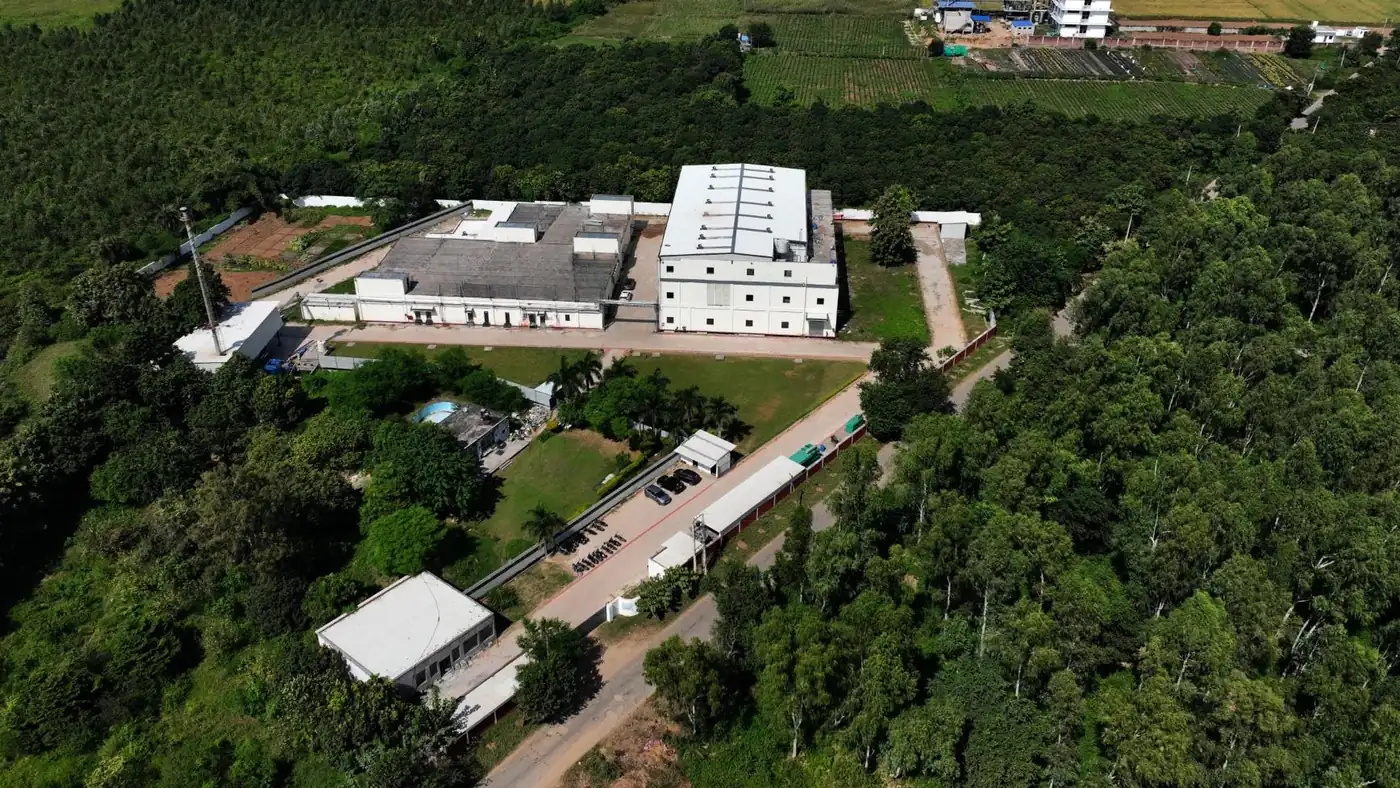
Aerial view of the Vibcare Healthcare plant on its 5-acre site at Dabkori, Panchkula
Operators at the ACG AF90T capsule filling machine, Vibcare Healthcare plant
Blister packing room at the Vibcare Healthcare plant, Panchkula
Licence and certification
Manufacturing licences MLF252023HR000004 and MLF282023HR000005 for tablets, capsules, oral liquids and external preparations, valid to 7 May 2028. WHO-GMP site certificate No. 1/182-1Drug-I-2024/10117 from FDA Haryana, 24 October 2024; GMP under Revised Schedule M; GLP for the laboratories; ISO 9001:2015. Infrastructure designed to EU PIC/S and UK MHRA expectations; the certification held is WHO-GMP and the Indian licences.
Sections and capacity
1.1 billion tablets, 950 million capsules, 30 million bottles and 40 million tubes a year; 750-plus formulations approved on the licence. No beta-lactam, cephalosporin or sterile section.
Laboratory and development
GLP certified laboratories in a separate block: Shimadzu HPLC, Agilent GC, Electrolab dissolution, UV spectrophotometer, Thermolab stability chambers, microbiology under HEPA laminar flow. Formulation development, analytical method work and stability run here.
Documents
Site Master File for vendor qualification; quality agreement signed after order confirmation; certificate of analysis with every batch; stability data on request; licence and certificate copies; the manufacturer’s documents for a registration file.
Commercial terms
Minimum one batch per product; written rate per pack; commercial lead time 45 to 60 days from artwork finalisation; advance on the first order, then as mutually agreed; the plant open for your audit by appointment.

Factory tour video

Seven minutes inside the WHO-GMP plant at Dabkori: manufacturing sections, packing lines and laboratories
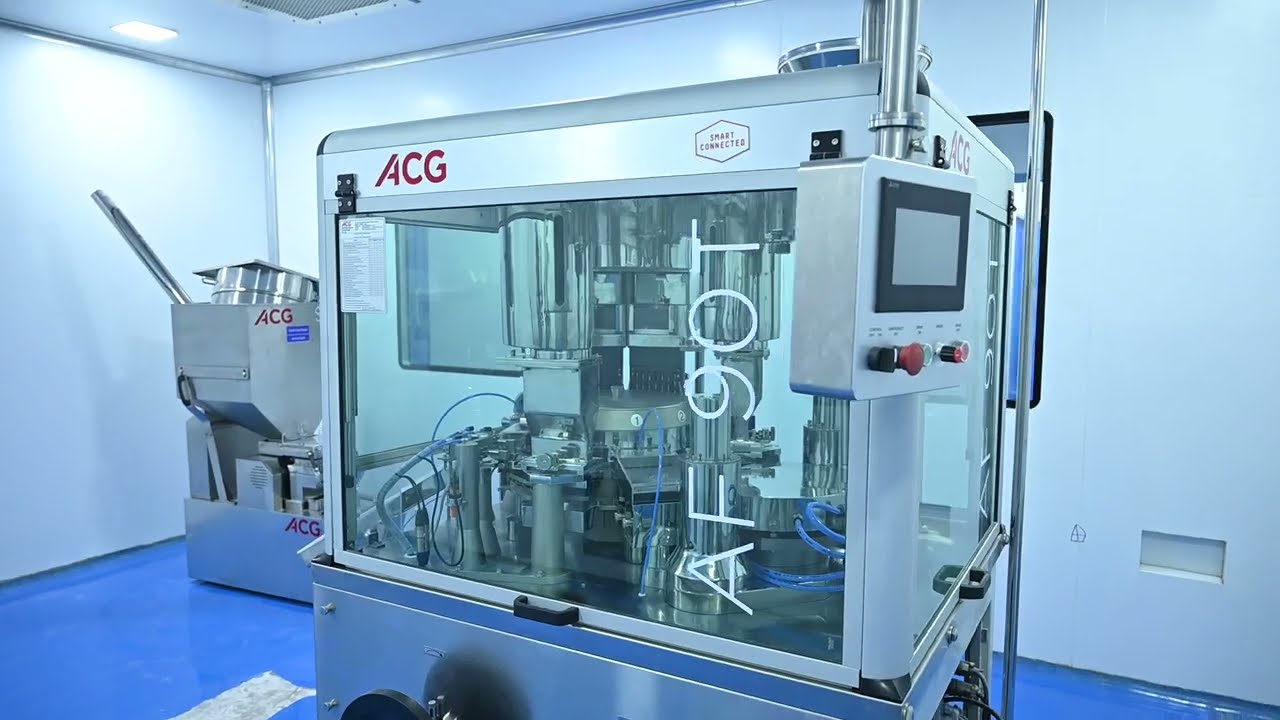
Inside Vibcare Healthcare: full factory tour of the WHO-GMP certified plant

Questions buyers ask about CDMO companies in India

Answered from the plant

What is the difference between a CDMO and a CMO?

A CDMO develops the formulation and then manufactures it; a CMO manufactures a formulation that already exists, to the brand owner’s process. If your product needs development, method work or stability studies before it can be filed, you need a CDMO.

Is a CDMO the same as third party manufacturing?

Third party manufacturing is the Indian term for contract manufacturing of an existing formulation under the manufacturer’s licence. A CDMO adds the development stage in front of it. At Vibcare Healthcare both run at the same plant: development on the CDMO route, manufacturing of listed formulations on the third party route.

Who owns the formula developed by a CDMO?

Whatever the development agreement says. Ask for ownership of the formulation, the dossier and the stability data to be written in before development starts, and for a confidentiality agreement before the brief.

Can CDMO companies in India supply regulated markets?

Only a site that holds the importing regulator’s own approval can supply that market. Ask each plant exactly which certification it holds. Vibcare Healthcare holds WHO-GMP certification and the Indian licences, with infrastructure designed to EU PIC/S and UK MHRA expectations, and supplies semi-regulated markets in Africa, Asia and Latin America on the importer’s registration.

How long does a CDMO project take?

It depends on the dosage form, the stability protocol and the market. Development, validation and stability run for months; commercial batches then follow the plant’s lead time, 45 to 60 days from artwork finalisation at Vibcare Healthcare. The timeline is given with the proposal.

What is the minimum commercial quantity?

One batch per product at Vibcare Healthcare; the batch size for each product and section is stated in the proposal.

What documents does a CDMO give for vendor qualification?

Site Master File, licence and certificate copies, a quality agreement, and then a certificate of analysis with every batch and stability data on request.

Can we audit the plant before signing?

Yes. Vibcare Healthcare’s plant at Khasra 6/2/2, Kot Road, Village Dabkori, Panchkula, Haryana 134103 is open to your quality team by appointment, about 45 minutes from Chandigarh airport.

How this guide was compiled

Sources and date

Written by Siddharth Singhal, Director, Vibcare Healthcare Private Limited, from the vendor-qualification questions the plant receives from pharma marketing companies, tender desks and importers; the Drugs and Cosmetics Act and Rules; the WHO-GMP certification scheme as applied by FDA Haryana; and industry figures from the India Brand Equity Foundation. Plant facts are taken from Vibcare Healthcare’s own licences and certificates, shown on this site with signatures blurred. No other company is named or ranked. Published 15 September 2026.

Send your product brief today

Product, strengths, dosage form and target market. You will get feasibility, the cost heads, batch size and timeline in writing.

info.vh@vibcare.co.in  ·  +91 85660 76607  ·  Khasra 6/2/2, Kot Road, Village Dabkori, Panchkula, Haryana 134103  ·  Download brochure